
In the ever-evolving world of Teyvat, the release of Genshin Impact Version 3.1 marked a significant milestone, introducing the sprawling desert region known as the Great Red Sands as part of the Sumeru expansion. This vast new area, the domain of the Dendro Archon Nahida, invites players to embark on fresh adventures across its sun-scorched landscapes and ancient, buried temples. Following in the footsteps of previous major map additions like Dragonspine and The Chasm, the Great Red Sands brings its own distinct flavor to the game's exploration, presenting a mix of streamlined convenience and monumental scale that defines the latest chapter in the traveler's journey.
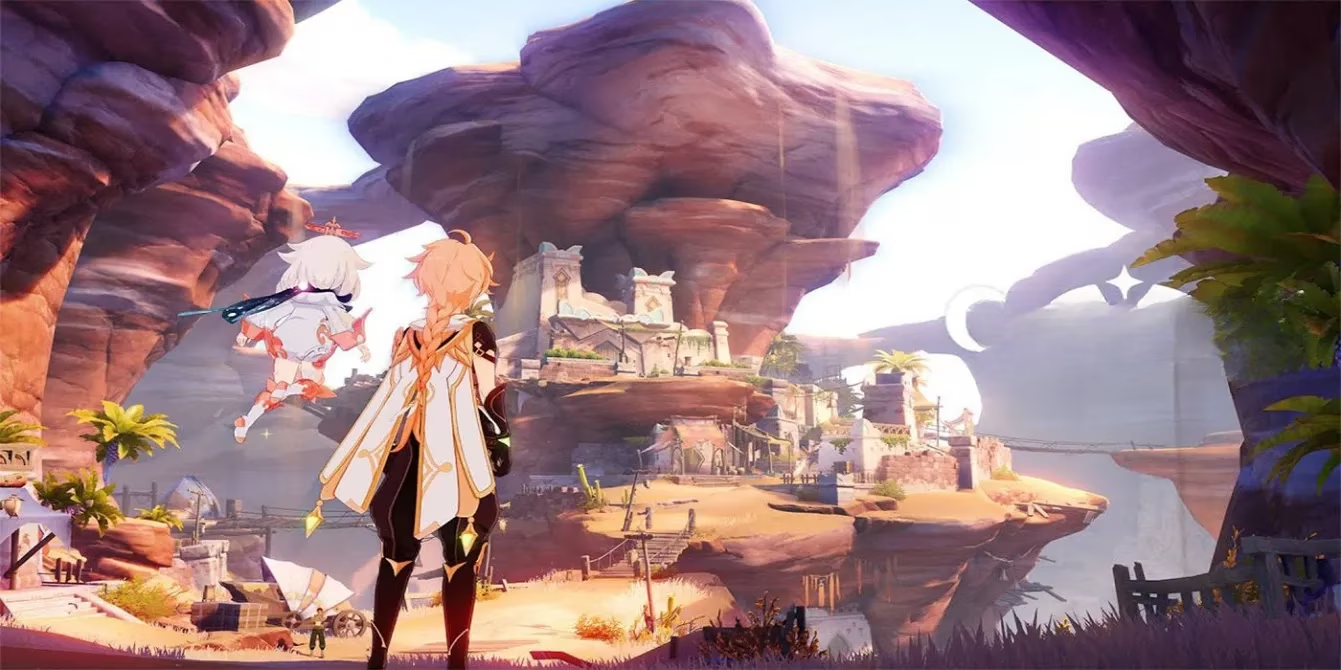
The Strengths of the Great Red Sands: Unrestricted Exploration
One of the most lauded aspects of this new zone is its commitment to player convenience and freedom. Unlike its predecessors, the Great Red Sands does not burden adventurers with survival mechanics that can hinder progress.
-
No Restrictive Environmental Mechanics: The zone completely avoids mechanics like Dragonspine's Sheer Cold or The Chasm's Lumenstone Adjuvant requirement. This design choice removes a layer of resource management and allows players to focus purely on exploration and combat.
-
Efficient Navigation Network: Despite being the largest single region added to the game to date, the area is well-served by a thoughtfully placed network of Teleport Waypoints. This system significantly mitigates the potential fatigue of traversing vast, open stretches of sand.
-
Clear Enemy and Path Design: Enemy camps and traversal routes are laid out in an obvious and logical manner. This clarity provides a more streamlined journey, where players can easily identify points of interest and challenges without excessive searching or confusion.
This combination of factors makes the Great Red Sands arguably the most convenient and accessible major expansion zone yet. The freedom to explore without environmental penalties is a refreshing change that has been warmly received by the community.
The Scale and Its Consequences: A Land of Repetition?
However, the immense size of the Great Red Sands is a double-edged sword. While it offers a breathtaking sense of scale and a stark contrast to the lush jungles of western Sumeru, this very scale can lead to perceptions of repetition.
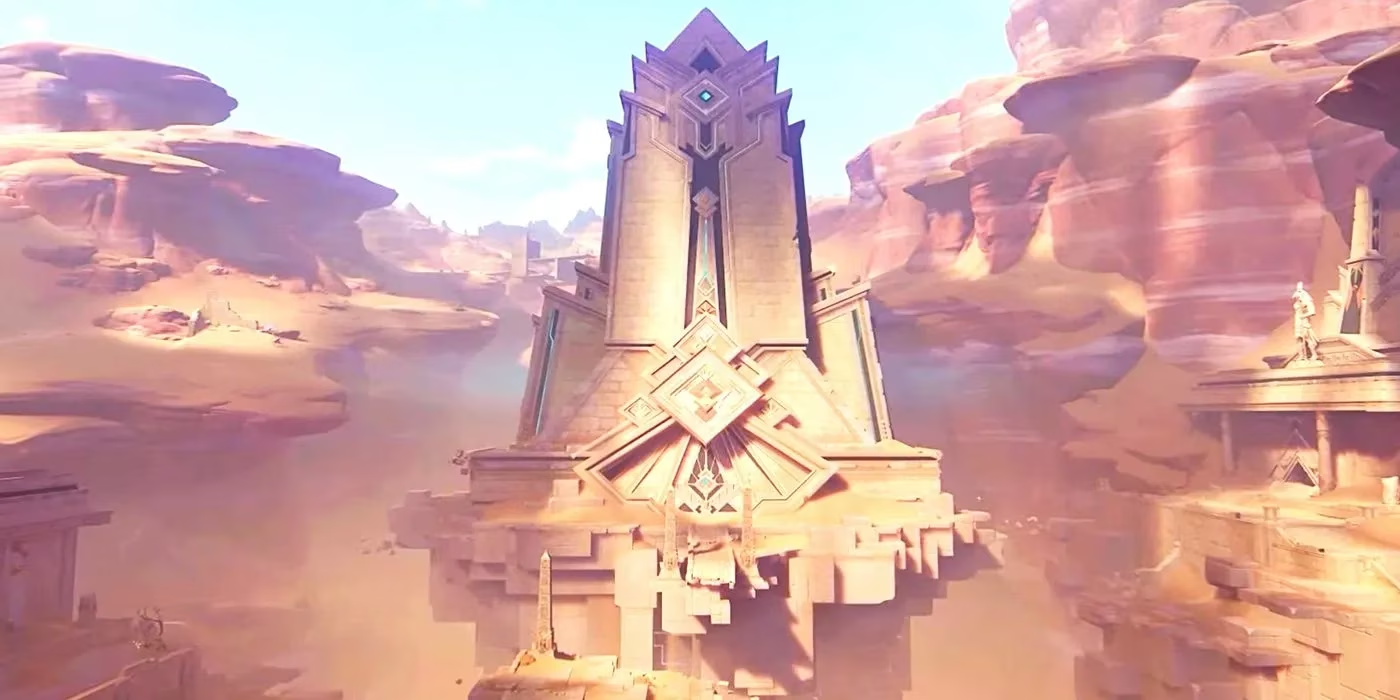
The desert's sprawling dunes and rock formations, while visually impressive, can sometimes blend into one another across different sub-regions. This lack of immediate visual variety is more pronounced here than in the densely packed, vertically layered jungles or the uniquely themed areas of Dragonspine and The Chasm. Furthermore, many of the underground temples and ruins hidden beneath the sands share similar architectural motifs and color palettes, making individual locations harder to distinguish from memory. This perceived homogeneity might be an intentional artistic choice to emphasize the harsh, unifying nature of the desert environment, but it does contrast with the highly distinctive, hand-crafted feel of earlier zones.
A Successful Contrast and a Template for the Future
Despite these considerations, the Great Red Sands succeeds brilliantly in one key design philosophy: creating a stark and memorable contrast. Its introduction avoids a potential pitfall seen in The Chasm, which, while excellent, shares a similar rocky, mountainous aesthetic with its parent region of Liyue. The desert of Sumeru feels fundamentally different from the rainforest, providing a jarring and exciting shift in biome that reinvigorates the exploration experience. This deliberate simplicity in both visual design and gameplay mechanics has proven to be a refreshing direction for the game's world-building.
Looking ahead to future updates in 2026 and beyond, the Great Red Sands may well serve as a template. It demonstrates that large-scale expansions can prioritize player-friendly exploration without compromising on a strong, cohesive identity. The hope within the community is that miHoYo will continue this pattern, delivering new regions that are vast and inviting, each with a unique environmental premise that avoids repetitive mechanics and encourages unhindered adventure across the ever-growing map of Teyvat. The desert may seem empty at a glance, but it is filled with the promise of undiscovered secrets and a streamlined journey that respects the player's time and curiosity.