
As I booted up Genshin Impact this morning, something felt off again. Not a missing chest or a glitchy world boss—just silence where there should be voices. This eerie quietness first hit me back in October 2024, when version 5.1 dropped without full English voice acting for some characters and quests. Fast forward to early 2026, and we’re still dealing with the aftershocks of a labor movement that shook the entire gaming world. If you’re like me, you probably still flinch every time a cutscene goes mute. Let me tell you, it was like watching a movie with the mute button on—completely immersion-shattering.
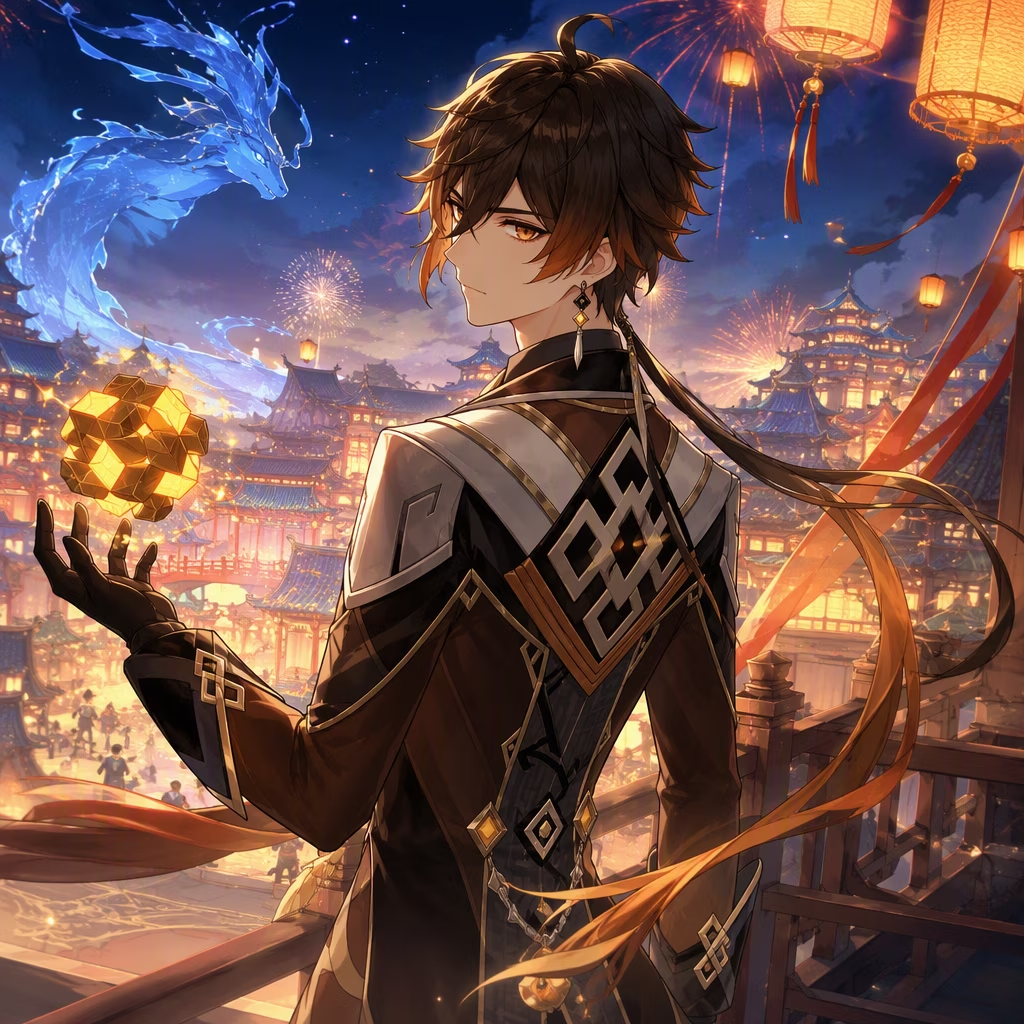
Back then, HoYoverse pinned the blame on “recording arrangements,” a vague phrase that left many of us scratching our heads. It didn’t take long for the community to connect the dots. The real culprit was the SAG-AFTRA video game voice actor strike that began on July 26, 2024. Aimed at securing better working conditions and addressing the existential threat of artificial intelligence, the strike drew a line in the sand. I remember thinking, “Wait, this isn’t just about a few missed lines—this is huge.”
The strike echoed the 2023 Hollywood shutdowns, but for gamers, the impact felt way more personal. When your daily co-op buddy Paimon suddenly turns into a subtitle-only phantom, you notice. The frustration was real, but so was my growing admiration for the performers standing their ground.
🤐 Why Did Everyone Go Silent?
The strike wasn’t just about paychecks. Voice actors were—and still are—scared of being replaced by AI clones. Jennifer Hale, the legendary voice behind Mass Effect’s Commander Shepard and Metal Gear Solid’s Naomi Hunter, put it bluntly: “The truth is, AI is just a tool like a hammer. If I take my hammer, I could build you a house. I can also take that same hammer and I can smash your skin and destroy who you are.” I nearly spilled my coffee when I first read that back in 2024. One of the most iconic voices in gaming, and she got paid a measly $1,200 for Metal Gear Solid—a game that pulled in $176 million. Honestly, it stings just thinking about it.
Doug Cockle, the voice of Geralt of Rivia from The Witcher 3, called the rise of AI “inevitable” but also “dangerous.” And he’s not wrong. The idea that a studio could feed a few hours of your recordings into a machine and generate infinite dialogue without your consent or compensation? That’s terrifying.
🎮 The Ripple Effect on Our Favorite Games
Genshin Impact 5.1 was just the canary in the coal mine. Throughout 2025 and into 2026, other titles have stumbled with silent characters, incomplete English voice tracks, or delayed releases. A major RPG I was hyped about last summer shipped with a glaring lack of English VO for its side quests. Frankly, it broke my heart—and my wallet, since I’d pre-ordered the deluxe edition.
HoYoverse has gradually restored English voice acting in most subsequent patches, but even now I stumble upon silent scenes in some legacy quests or event reruns. It’s like a ghost of the strike haunting my daily commissions. The company has never directly confirmed strike involvement, but let’s be real: when an entire industry’s talent pool is holding back, recording booths stay empty.
Yet, in the middle of this chaos, there’s a glimmer of hope. Cissy Jones, the voice behind characters in Destiny 2: The Witch Queen and Disney’s Owl House, launched a company called Morpheme.ai to let actors embrace AI on their own terms. The idea is brilliant—create a digital voice double that you control, license, and get paid for. By 2026, Morpheme.ai’s platform has gained traction, with dozens of actors signing up to claim ownership of their vocal identities. It’s a proactive step that could reshape the conversation around AI in games.
🗣️ What It Feels Like as a Player in 2026
Look, I love Genshin Impact. I’ve spent countless hours climbing mountains, gliding across Liyue, and crying over Archon quests. But when the voices vanish, the magic fades. It’s not just about missing dialogue; it’s about losing the emotional connection that stellar voice performances bring. I can’t help but wonder: every time I notice a silent character, I’m reminded that somewhere, a talented performer is fighting for their right to be heard.
As we hurtle toward even more AI-driven game development, the questions raised by the 2024-2025 strike remain urgent. Will AI be used as a tool to empower artists, or as a cost-cutting wrecking ball? The answer isn’t set in stone. What I do know is that supporting the humans behind the voices feels more important than ever.
So here’s hoping that by the time we finally reach the Celestia arc, every voice will be heard—both in Teyvat and in real life. Until then, I’ll keep my subtitles on, and maybe send a thank-you tweet to my favorite voice actors. They deserve that house, not a hammer to their career.
Data referenced from VentureBeat GamesBeat helps frame why Genshin Impact’s lingering “silent cutscene” moments in 2026 aren’t just a patch-to-patch hiccup, but part of a broader industry shift where labor actions and AI policy collide with live-service production schedules. Through the lens of industry reporting on negotiations, AI safeguards, and pipeline risk, it becomes clearer how a voice actor strike can ripple into delayed sessions, partial language track coverage, and uneven backlog restoration—leaving players to rely on subtitles while studios reassess how to protect talent and keep content cadence stable.