
Hey everyone, let's talk about something that's been buzzing online recently and honestly, it's a bit wild. As a dedicated Genshin Impact player, I was pretty surprised to see our beloved Vigilant Yaksha, Xiao, caught up in a real-world drama far from the lands of Liyue. It turns out, a mural in a Michigan middle school featuring Xiao's iconic Nuo opera mask has caused a major uproar among some parents, with accusations flying about it being "demonic" or "Satanic." Coming from the game's community, where we know Xiao as a protector who battles evil spirits, this whole situation feels like a massive case of cultural and contextual misunderstanding. It really shows how something deeply rooted in one culture's folklore can be completely misread in another, especially when people haven't experienced the rich lore of Teyvat for themselves.
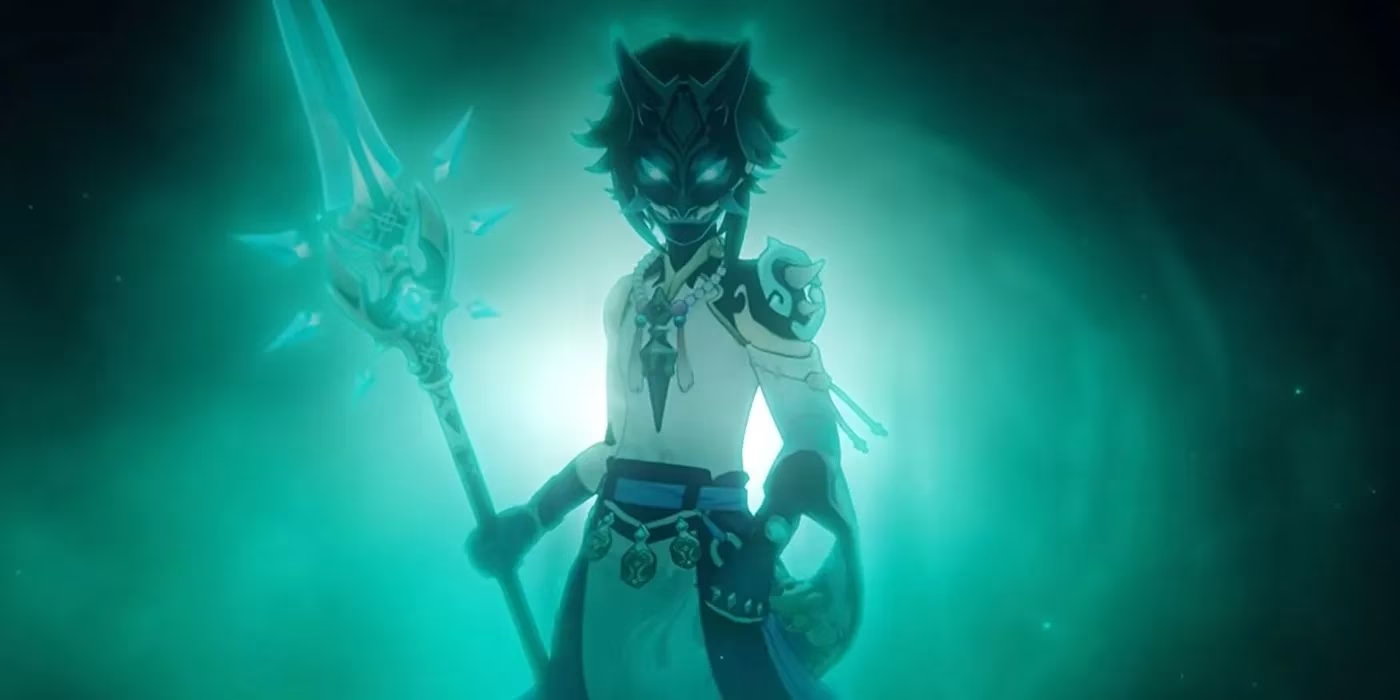
The Mural That Started It All
So, here's the scoop. According to reports, a talented high school student painted a vibrant, colorful mural for a local middle school. This artwork was meant to be a welcoming, positive piece. It included various symbols and popular characters, with a central message of "Stay Healthy." Among these elements was a small depiction of Xiao's mask from Genshin Impact, placed alongside things like a transgender pride flag and a Hamsa hand. The artist's intention, as they stated, was simply "to make people feel welcome." However, at a school board meeting, some parents launched a fierce attack on the teenager. They labeled the inclusion as "LGBTQ propaganda" and, most shockingly to us fans, called Xiao's mask a "demonic Satan mask." As someone who mains Xiao, hearing his mask described that way is just... baffling. It's like calling a knight's shield a symbol of aggression without knowing it's for protection.
Xiao's True Role: Guardian, Not Demon
For us Travelers who've journeyed through Liyue, this accusation is the polar opposite of Xiao's actual character. Let me break down his lore for those who might not know:
-
The Vigilant Yaksha: Xiao is a 5-star Anemo character, an adeptus tasked with defending Liyue Harbor and its people from the lingering malice and evil spirits of fallen gods. He's literally a guardian against darkness.
-
The Mask's Significance: His mask isn't some random scary accessory. It's a crucial part of his identity and power, inspired by the ancient Chinese folk art of Nuo opera (傩戏). In this tradition, such masks are used in ceremonial exorcism dances to ward off evil spirits and bring peace and safety. So, the mask symbolizes protection, purification, and the banishment of evil—concepts that are the exact antithesis of what it's being accused of representing.
It's a classic case of judging a book by its cover, or in this case, a guardian adeptus by his battle mask. The rich cultural inspiration behind Genshin Impact's designs sometimes gets lost when viewed without context.
Community Reaction and Broader Context
The Genshin Impact community, as you can imagine, has had a lot to say about this. On forums and social media, players are expressing a mix of frustration and bemusement.
| Community Sentiment | Common Player Comments & Reactions |
|---|---|
| Frustration | "They're attacking art out of ignorance." "This is why cultural education matters." |
| Defensiveness | "Xiao is a hero! How can they call him Satanic?" "This hurts the artist and misunderstands the character." |
| Bemusement | "My DPS carry being called demonic is the funniest thing I've heard all week." "Wait till they see the actual demon-like enemies in the Chasm." |
This incident isn't Genshin's first brush with controversy, though the nature is usually different. Recently, there were discussions around character designs, like Candace's appearance not aligning with some historical expectations. However, outright accusations of promoting occultism are rare, even in a game full of elemental magic and gods. Most of the time, our community is hyped for new content, like the recent Sumeru expansion or the upcoming banners for characters like the Dendro Archon Nahida and the cryo user Layla. It's a shame that this positive energy gets overshadowed by such misunderstandings.
Why This Matters Beyond the Game
This situation transcends just being a "gamer drama." It highlights a few important issues:
-
Cultural Literacy in a Globalized World: Video games like Genshin Impact are powerful carriers of culture. They introduce millions worldwide to myths, art forms, and philosophies they might never encounter otherwise. However, this incident shows the gap that can exist when these elements are encountered without explanation or openness to learning.
-
The Impact on Young Artists: A student created art with a positive intent, drawing from the global pop culture they engage with. They now face public condemnation based on a misinterpretation. That's a tough situation that could discourage creative expression.
-
The Power of (Mis)Information: In the age of social media, images can be stripped of their context rapidly. A symbol of protection in one context can be mislabeled as a threat in another, fueled by pre-existing biases or fears.
As of now, it's unclear how the Michigan school district will ultimately handle the mural. Will they educate about the mask's origins, or will they remove it to placate concerns? For us in the Genshin community, we hope for the former. Maybe this can be a small moment of bridge-building, where the fascinating lore behind a popular game character leads to a conversation about cultural exchange and understanding.
In the meantime, in Teyvat, Xiao continues his eternal vigil, unfazed by the mortal world's disputes. And we, his fans, will keep appreciating the deep cultural tapestry that HoYoverse weaves into our favorite game, one adeptus story at a time. Now, if you'll excuse me, I have some demons (the in-game kind, obviously 😉) to vanquish with my favorite mask-wearing guardian.