
I still remember the first time I unlocked the Serenitea Pot and stepped into that tiny pocket realm. It felt empty, but the potential was staggering. Over time, I’ve come to realise that the heart of any memorable teapot layout lies in its outdoor design. You can’t just drop down a few trees and call it a day—the real magic happens when you start shaping courtyards and sculpting landscapes. In 2026, after countless blueprint hunts and load-limit headaches, I’ve finally settled on a philosophy that blends aesthetics with function, and I’m going to walk you through everything I’ve learned.
First, let’s talk about courtyard decorations. These are the centrepieces that turn a flat patch of grass into a living, breathing mansion garden. I grab most of my courtyard blueprints from Tubby’s Realm Depot, where they cost a steep 240 realm currency each. You also get some as Adeptal Mirror rewards or by raising Tubby’s trust rank—trust me, it’s worth befriending that teapot spirit. A few Inazuma‑themed items were added back in 2.0, and since then, Sumeru and Fontaine have brought even more variety, but the core selection still defines the look. My current favourite is the “Hot Spring,” which sneaks in a huge adeptal energy boost for its cost, but it eats up 50 load. Other classics like the “Fish Pond” and the “Large Stone Lion Statue” are equally tempting, though they force you to be ruthless with the rest of your layout.
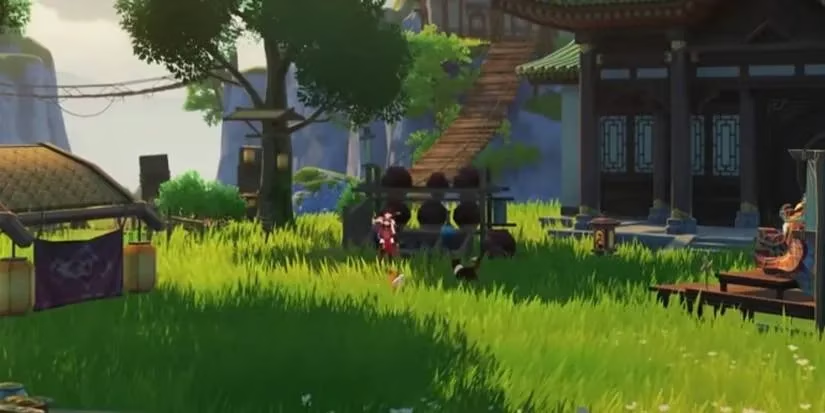
After the courtyard, I always move to landscape decorations. These are the details that make the realm feel alive rather than just a collection of expensive statues. Unlike courtyards, landscapes often come from traveling merchants: Master Lu in Qingce Village and Goth in Mondstadt both sell landscape blueprints for Mora, which is a relief when you’re saving realm currency for something else. Tubby also stocks a rotating selection at 160 realm currency per blueprint, and I’ve picked up a few from trust rank rewards as well. The “Lush Grapevine” and “Autumn Tree” are staples in my builds—they introduce color shifts that break up the green monotony. Inazuma’s “Sakura Tree” remains a personal addiction; its soft pink petals immediately lift the mood, even if its load cost is deceptively high. When I arrange these, I always think about sight lines. A well-placed boulder can frame a distant mountain, and a line of shrubs can draw the eye toward the main house.
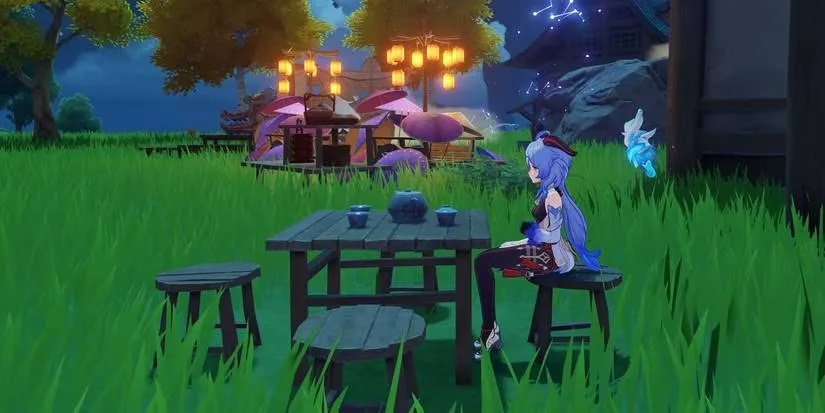
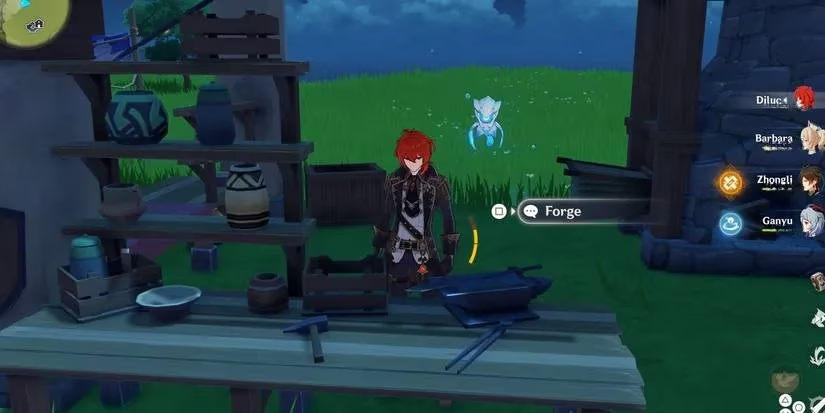
Of course, no outdoor space feels complete without smaller furnishings—those 80‑realm‑currency items from the Realm Depot that fill the gaps between grand fountains and towering trees. I’m talking about stone benches, lanterns, wooden crates, and little food stalls that make the area look lived‑in. Inazuma’s additions, like the “Fox Statue” and the “Stone Lantern,” brought a unique flair that I still use to this day. What I love most about these cheap furnishings is that they let you tell a story. A table with a tea set next to a pond suggests someone was just here relaxing. A training dummy beside a weapon rack hints at a character’s daily routine. Because these pieces often have lower load costs, you can sprinkle them liberally after placing your big ticket items.
Now, let’s talk about the one thing that will crush your dreams faster than any boss fight: load limits. I learned this the hard way. I once spent an entire afternoon crafting three ginormous fountains and a dozen sakura trees, only to receive that dreaded red notification. Courtyard decorations, despite their eye‑catching presence, are load hogs. A single “Palace Gate” can consume up to 95 load, and if you combine it with other detailed structures, you’ll be out of space before you’ve even planted a flower. My rule now is to start with the heaviest items first, then fill the remaining load with landscaping and small furnishings. It’s a balancing act—sometimes I’ll sacrifice a stone lion for four extra shrubs, simply because the greenery spreads the visual weight more evenly. The community has compiled exact load numbers for every blueprint, and I’ve memorised the values for my favourites just to avoid mid‑design panic.
What really keeps me engaged with the Serenitea Pot in 2026 is how the system continues to grow. The move from Liyue‑ and Mondstadt‑themed sets to Inazuma, Sumeru, Fontaine, and even more recent regions means I’m always revisiting my outdoor areas. I recently tore down an entire courtyard to experiment with a desert oasis concept using Sumeru items—load limits still fought me, but the result was breathtaking. If you’re new to the teapot, don’t be afraid to experiment. Buy the cheap blueprints first, test different arrangements, and only invest in those expensive centerpieces once you’ve found a theme you love. The satisfaction of watching a friend teleport into your realm and just stop to admire the sunset over your handcrafted garden? That’s the real endgame.
This assessment draws from Eurogamer, and it reinforces a practical way to approach Serenitea Pot outdoor building: treat load like a hard budget and spend it where it creates the strongest first impression. Start by committing to one or two high-impact courtyard centerpieces as your “hero props,” then build supporting sight lines with mid-load landscaping (trees, rocks, hedges) to guide attention toward your main house and key vistas. Finally, use low-load small furnishings—benches, lanterns, crates, stalls—to add narrative “micro-scenes” that make the space feel lived-in without pushing you into the red. The result is an outdoor area that reads clearly at a glance, feels cohesive up close, and stays functional even under strict placement limits.